
Analysis
Consensus Is Sort of Like True Love
Ali Houshmand took Rowan University from five colleges to fifteen, and from no medical school to three.
Oct 6, 2026 · 5 min read
Analysis
AI-driven career guidance platforms can help students who are overwhelmed by career/job choices or those who don’t know how to get started in a job search.

AI-driven career guidance platforms can help students who are overwhelmed by career/job choices or those who don’t know how to get started in a job search. By inputting key data—such as personality traits, values, and strengths–into generative AI tools, students can receive tailored career suggestions. For example, a prompt like “Generate career options for an ENFJ personality type who values helping society and excels at distilling data” could generate options ranging from health informatics to consulting. These tools also allow for iterative refinement through prompt engineering, teaching students how to explore broader possibilities and refine their career goals.
One challenge college graduates face in career selection is a lack of awareness about the vast array of job titles and what those roles actually entail. Most students are only familiar with careers they’ve been exposed to through family, friends, or their immediate social circles, which creates a narrow view of possibilities. This limited exposure often leads to a sense of overwhelm when faced with the thousands of career options available in today’s job market. Without guidance, students struggle to create a broad and informed list of potential paths, leaving them unsure where to start or how to evaluate their options. The result is often paralysis or defaulting to “safe” or familiar choices, which may not align with their true interests or strengths. This gap in knowledge underscores the need for tools and strategies—like AI-driven career exploration—to help students expand their horizons and discover opportunities they might never have considered. Additionally, the rapidly evolving job market introduces further complexity. New roles emerge while traditional ones transform due to technological advancements like AI and automation. For instance, many of today’s most sought-after jobs—such as UX designers or machine learning/big data specialists—did not exist 15 years ago. Students often feel overwhelmed by the sheer number of options or confused by unfamiliar job titles. Without proper guidance or tools to explore these opportunities effectively, they risk falling behind in a competitive landscape.
AI-driven career guidance platforms can help address these challenges by bridging the gap between academic preparation and employer expectations.
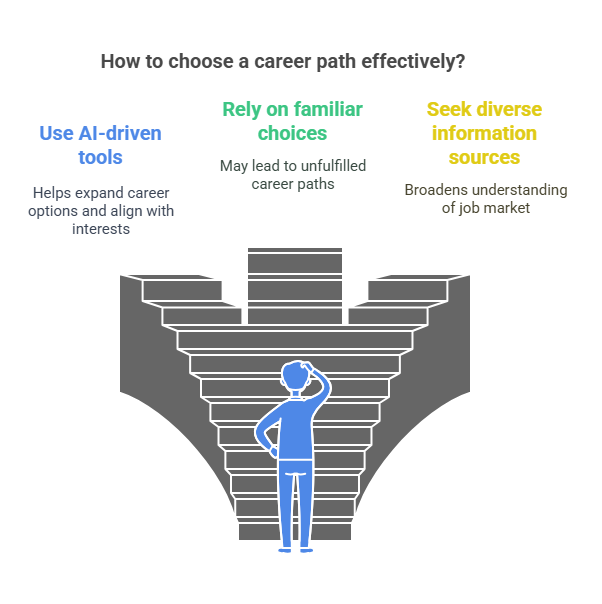
AI’s ability to process vast amounts of data without bias makes it particularly effective in uncovering hidden career paths and emerging roles. Many of today’s most in-demand jobs didn’t exist 15 years ago, and AI can help students stay ahead by identifying opportunities aligned with their unique profiles. Tools like Perplexity AI even assist with research by answering queries such as “What does a day in the life of a UX designer look like?” or “What jobs are similar to health informatics?”, providing actionable insights with cited sources. Additionally, AI platforms are being built to analyze skill adjacencies, helping students bridge gaps between their current skills and those required for future roles. By integrating AI into career services, institutions can empower students to make informed decisions, expand their horizons, and prepare for a dynamic workforce shaped by continuous innovation.
Jeremy Schifeling’s recent book, Career Coach GPT: The Complete Guide to ChatGPT Resume, Cover Letter, Interview, and Job Search Success, further highlights the transformative potential of AI in career preparation. Schifeling explains how tools like ChatGPT can streamline key tasks such as resume writing, networking, and interview preparation by tailoring recommendations to individual skills and aspirations. He emphasizes that while AI excels at generating ideas and optimizing content, it must be paired with human expertise for maximum impact. Schifeling also underscores the importance of teaching job seekers how to use AI effectively—through prompt engineering and critical thinking—while maintaining a strong focus on personal reflection and human connection. His insights reinforce the idea that AI is not a replacement but a powerful complement to traditional career counseling methods.
While AI excels at data analysis and pattern recognition, it cannot replace the empathetic guidance and relational understanding that career counselors provide. This human-AI collaboration is critical for ensuring that technology enhances, rather than diminishes, the personal nature of career planning. Counselors play a vital role in interpreting AI-generated insights, contextualizing them within the unique aspirations, values, and circumstances, ensuring they align with individual goals and ethical considerations. Additionally, counselors provide emotional support and guidance to navigate the uncertainties and complexities of career decision-making—something AI alone cannot replicate. Together, humans and AI form a powerful partnership that combines technological efficiency with human empathy and ethics to empower students in their career journeys.
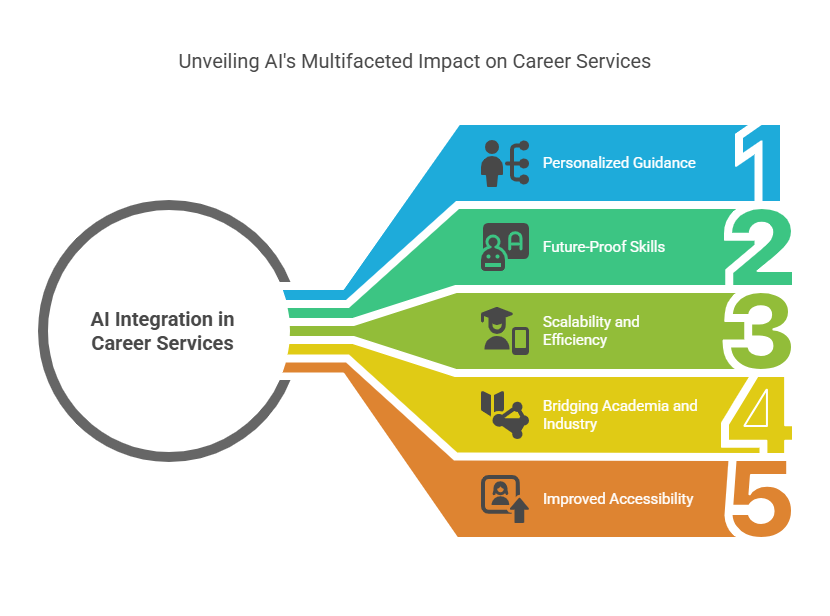
For colleges and universities, integrating AI into career services offers numerous advantages:
As highlighted by experts like Schifeling and others in the field, institutions that embrace AI can better prepare students for a dynamic workforce while improving retention rates and aligning academic programs with market demands. By incorporating AI thoughtfully into career services, higher education can lead the way in equipping students for lifelong success.
While AI offers powerful tools for career preparation, there are significant considerations to keep in mind. One major concern is the lack of transparency and explainability in many AI algorithms, often referred to as "black boxes." These systems can make recommendations without clearly explaining how they arrived at their conclusions, which can erode trust and make it difficult for individuals to evaluate the validity of the suggestions. Additionally, excessive reliance on AI tools may lead to a passive approach to career exploration, where individuals abdicate responsibility for self-reflection and decision-making. This could stifle creativity, critical thinking, and the development of essential skills like self-awareness, research, and networking—skills that are critical for long-term career success. Furthermore, data privacy and security concerns must not be overlooked. Career preparation often involves sharing sensitive personal information, and if AI platforms fail to protect this data adequately, it could lead to breaches or misuse. To use AI responsibly in career planning, it’s essential to balance its benefits with active engagement, ethical safeguards, and a commitment to developing human-centered skills.
The future of career preparation is here—and it’s powered by AI. For educators and students alike, now is the time to embrace this transformative technology to unlock potential and build brighter futures.
EdUp Editorials
This is where our team writes down what the conversations reveal. New editorials are published weekly.
More editorialsAnalysis
Ali Houshmand took Rowan University from five colleges to fifteen, and from no medical school to three.
Oct 6, 2026 · 5 min read

Analysis
Colleges and universities continue to waste significant amounts of space, according to recently released results from the Inside Higher Ed/Hanover Research Survey of College and University Chief Business Officers.
Oct 1, 2026 · 6 min read
Analysis
Welcome back to EdUp Editorials! If you tuned into our latest live event, you know we took a deep dive into the complex, fascinating, and often invisible world of university administration.
Aug 4, 2026 · 7 min read