
Analysis
Consensus Is Sort of Like True Love
Ali Houshmand took Rowan University from five colleges to fifteen, and from no medical school to three.
Oct 6, 2026 · 5 min read
Analysis
UNITE, AI, and the Opportunity Ahead
Recently, I found myself in back-to-back moments that captured just how quickly the AI conversation is accelerating in higher ed, and how urgent it is to ensure the process includes and reflects the needs of all students.
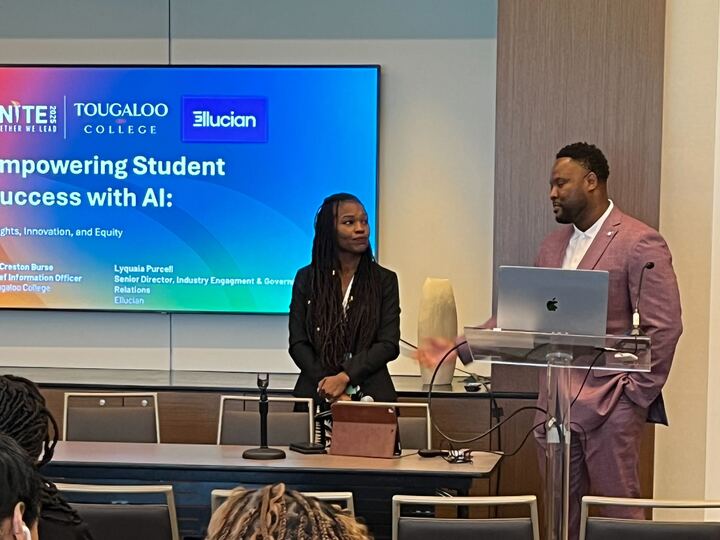
The first was at UNCF UNITE 2025, where I joined leaders who believe that supporting HBCUs is essential to advancing higher education for all and co-led the session Empowering Student Success with AI: Insights, Innovation, and Equity. The second came on the same day as my presentation, when the U.S. Department of Education released a Dear Colleague Letter, signaling federal support for using AI to improve student outcomes.
These two moments, one grounded in student voice and the other in federal policy, connected powerfully. The message was clear: AI isn’t coming. It’s here. And we can’t afford to build around Black learners. We have to build with them.
In our session, we shared findings from two key reports:
One thing was clear in the data. HBCU students are already using AI to brainstorm, write, research, and organize their academic lives. They're not questioning whether AI belongs in higher education. They need institutions to move faster to support their use of it.
In fact, 98% of HBCU students surveyed say they’re already using AI tools, but many lack institutional infrastructure, guidance, or instruction on how to use them responsibly and effectively.
One of the most powerful moments of the session came when a student from Tougaloo College chimed in on the conversation. She thoughtfully affirmed some of the findings in the data but also pushed back in a meaningful way.
She reminded the room that while many students are curious about AI, they also worry it could diminish opportunities for critical thinking. She emphasized that students want to engage deeply, not just efficiently, and that AI must be introduced in ways that empower, not replace, intellectual exploration.
Her perspective sparked a dialogue that continued well after the session, particularly around how HBCUs can integrate AI into coursework in a way that sharpens critical thought rather than shortcuts it. It was a needed reminder that true innovation isn’t just about expanding access to tools. It is just as much about how we design, teach, and implement them with care and intention.
The Dear Colleague Letter on Artificial Intelligence, released during UNITE, felt especially timely. It encourages institutions to use federal funds to:
This letter signals a shift. Innovation and student success can and must move forward together.
At Ellucian, we’re partnering with HBCUs and other mission-driven institutions to put AI to work for students in ways that are responsible and student-centered. That includes:
I’m grateful for the opportunity to work alongside HBCUs to apply AI in ways that directly support student success.
We have the data, the tools, and now the funding.
If you're ready to learn more about how HBCU students are engaging with AI and what they need next, join the waitlist to receive The Shift Ahead Report.
Let’s ensure HBCUs are not just included but leading.
EdUp Editorials
This is where our team writes down what the conversations reveal. New editorials are published weekly.
More editorialsAnalysis
Ali Houshmand took Rowan University from five colleges to fifteen, and from no medical school to three.
Oct 6, 2026 · 5 min read

Analysis
Colleges and universities continue to waste significant amounts of space, according to recently released results from the Inside Higher Ed/Hanover Research Survey of College and University Chief Business Officers.
Oct 1, 2026 · 6 min read
Analysis
Welcome back to EdUp Editorials! If you tuned into our latest live event, you know we took a deep dive into the complex, fascinating, and often invisible world of university administration.
Aug 4, 2026 · 7 min read